
Building Type · Salt & Sand Storage
Salt sheds that don't corrode from the inside.
Road salt corrodes conventional buildings: rebar, sheet metal and fasteners. An engineered fabric salt shed puts a non-corroding membrane and a hot-dip galvanized frame between the stockpile and the structure.
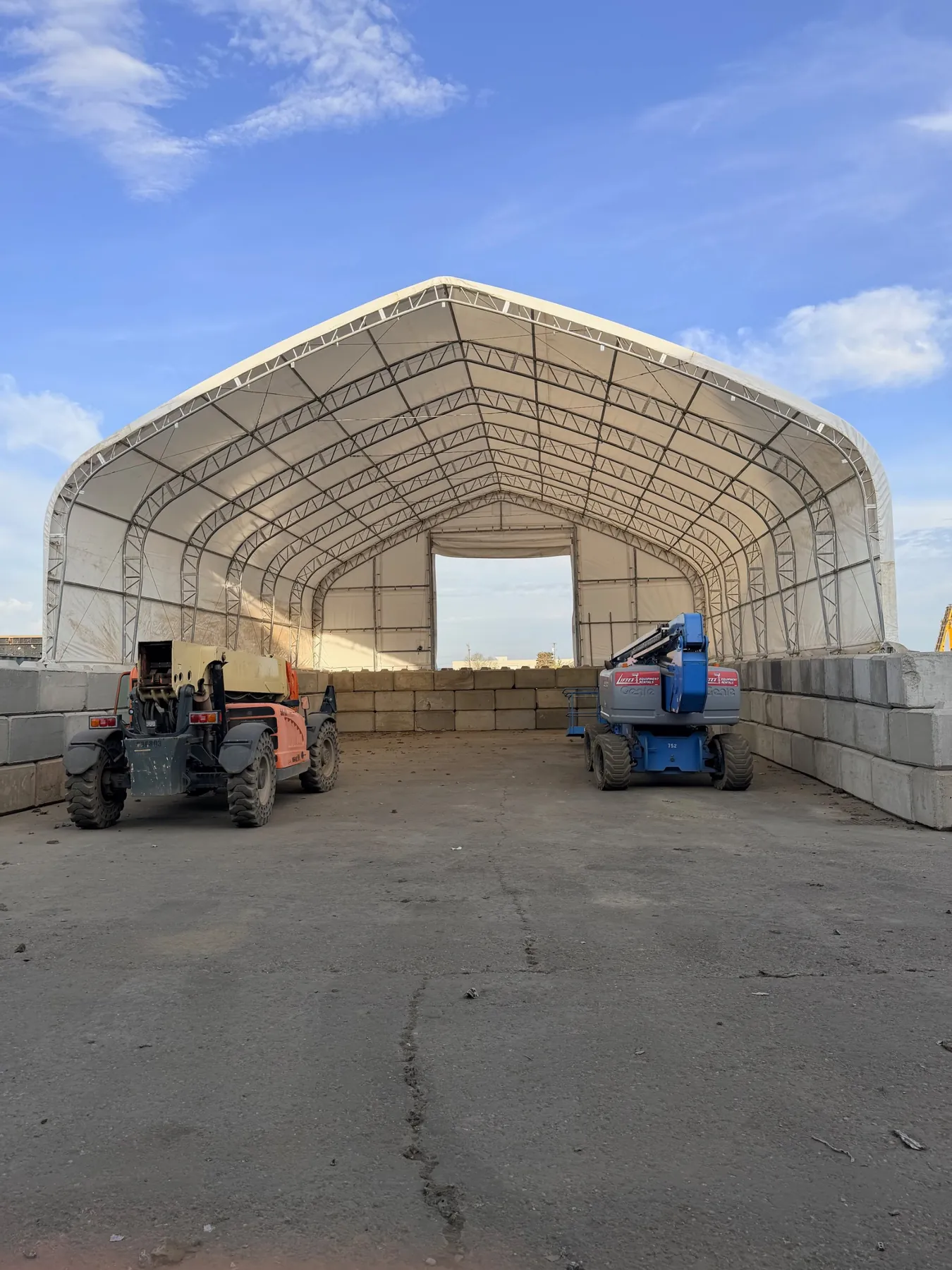
Why salt storage moved to fabric
- Salt resistance. The membrane doesn’t corrode, and the galvanized frame stays protected where conventional structures typically rust by year two.
- Better spreading. A weather-tight envelope keeps salt dry, preventing clumping and leaching and reducing product loss each season.
- Runoff containment. Covered storage on a proper pad with perimeter walls meets environmental containment expectations that uncovered piles don’t.
- Daylight access. Translucent covers let operators see inside during daytime loading without exposing light fixtures to salt air.
Configured for your operation
- Ponywall foundations. Cast concrete or lock-block walls absorb loader impact and raise the arch for full-height piling.
- Open gable ends. Drive-through loading, or fabric end walls with oversized openings sized to your loaders and trucks.
- Spans of 40′ to 150′+, matched to stockpile volume and turning radius.
- Mixed-use layouts. Split sheds for salt and sand, or treated and untreated product.
- Conveyor-fill ready. Peak clearances and openings for overhead fill systems.
Quick specs
Every building is engineered to its site. These are the ranges we design within:
| Clear span | 40′ to 150′+ |
| Length | Any length, extendable in bay increments |
| Foundation | Concrete ponywall, lock block or grade beam |
| Frame | Hot-dip galvanized structural steel |
| Cover | PVC or PE membrane, engineered for weight |
| Loading | Site snow and wind loads per the National Building Code |
| Access | Open end, fabric end wall or door systems |
| Typical capacity | 500 to 10,000+ tonnes |
Beyond the build
New installation
Design-build delivery from foundation to final tensioning, with one contractor accountable for the whole job.
Cover replacement
A worn salt shed cover can be recovered, adding 15 to 20 years at a fraction of replacement cost.
Inspection programs
Annual condition reports identify tension loss and corrosion before winter operations depend on the building.
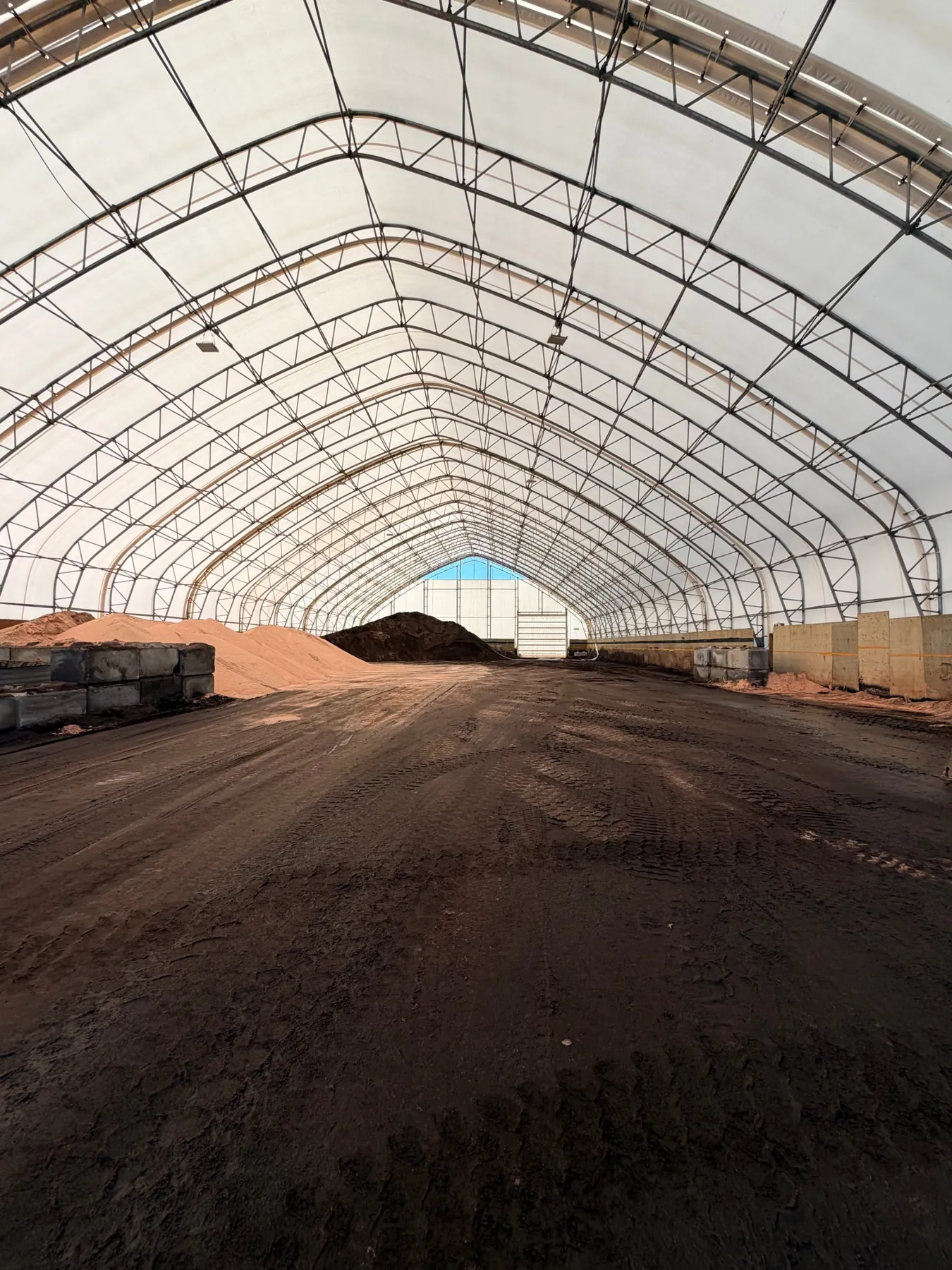
FAQ
Questions owners ask
How big should our salt shed be?
Size it from your stockpile, roughly 80 lb per cubic foot for bulk road salt, plus room for equipment and the pile's angle of repose. Send your tonnage and loader sizes and we'll convert them into a footprint. Most municipal sheds fall between 60′ and 100′ spans.
Why ponywalls instead of piling against the fabric?
Ponywalls absorb loader bucket impact that would damage a fabric sidewall. They also raise the arch, so you can pile full-height against the wall without losing capacity to the arch curve.
Can you replace the cover on our existing salt dome?
Yes. Recovers are among our most common projects. If the galvanized frame is sound, a new membrane and hardware restore the building for a fraction of new-build cost.
Do fabric salt sheds meet environmental storage requirements?
Covered storage on an impermeable pad with contained drainage is the core of Canadian salt management best practice. We design to your municipality's or province's salt management plan; bring it to the design meeting.
Other building types
View allYour next project deserves the right team.
From initial planning to final installation, our team brings the expertise and execution to move your project forward. An estimator replies within one business day.
- Fixed-price quotes
- Any manufacturer
- 24/7 emergency line